Just after Easter the menu arrived for my annual Whisky Dinner at The Port Charlotte Hotel on Islay during the Whisky Festival there at end of May. Another belter of a menu from chef, Ranga. I took it away with on holiday earlier this month to see if I could work out some of the whisky/food pairings I want to make. A start made but not too much further forward! Fortunately I am over there end of this month so hope to get time to finalise some matches.
Also recently, I got the chance to taste some chocolates from Iain Burnett, under the name of The Highland Chocolatier. He’s made some flavours to match certain whiskies and they really are good. At the moment there isn’t one to match Bowmore Darkest which can be great with the right chocolate but here’s hoping. If you look on his website at www.highlandchocolatier.com you’ll see what matches he has created so far. They’re only available via the website or at their shops in Grandtully (Perthshire) or St. Andrews but certainly worth trying. Even if you don’t have the whiskies he suggests, it would be so enjoyable trying them with others to see what works for you.
The sample of Kilchoman Sanaig is promised but not yet arrived so maybe next time. However, since I last wrote I have been tasting Highland Park Ice and the new Laphroaig expression, Lore as well as a Lagavulin.
HP Ice (53.9% abv) isn’t the usual cask maturation format for that brand. This one is a 17 year old from 100% bourbon maturation to it and, I have to say, I got a lot of glorious enticement and complexity from the nose but not the palate. I found that a bit disappointing. All the lovely aromas didn’t transfer through into the same complexity of flavour for me and I found it a bit bitter on first trial. It’s an interesting comparison with others in the HP range, though and I do intend to give it another try to see what else I can find in it. I’d be interested in hearing what readers of this site think about it if you can get hold of some. It’s a special edition and limited to 30,000 bottles globally.
Laphroaig Lore (48% abv / £85 per bottle) had all the characteristics you might expect of Laphroaig but more of the tar and toastiness. Some of the usual sweetness I usually find there wasn’t quite so much in evidence for me in this. But I did like it. Not as pale as the newest Lagavulin (see below) but not the “deep mahogany” claimed on the media release. Made me wonder if I’d been sent the right one! Rich late summer gold with brass and copper glints in my view. Anyway, it comes from several different cask types to create a rich and nuanced flavour profile and includes first-fill bourbon, quarter casks and oloroso sherry hogsheads. On the nose it is richly smoky with some sweaty sock! Touch of iodine and antiseptic; rich toasted grain and some oak; even a hint of Turkish delight. With water, some stewed fruit, smoke and varnish – wax floor polish on warm wood. Bonfires and some vanilla and coconut and then a fruity, almost peachy backnote. On the palate it’s waxy, smoky, peaty with charred wood and rich cereals; some tar, sweetness and a bit of barbecue char. As you might expect, a long finish.
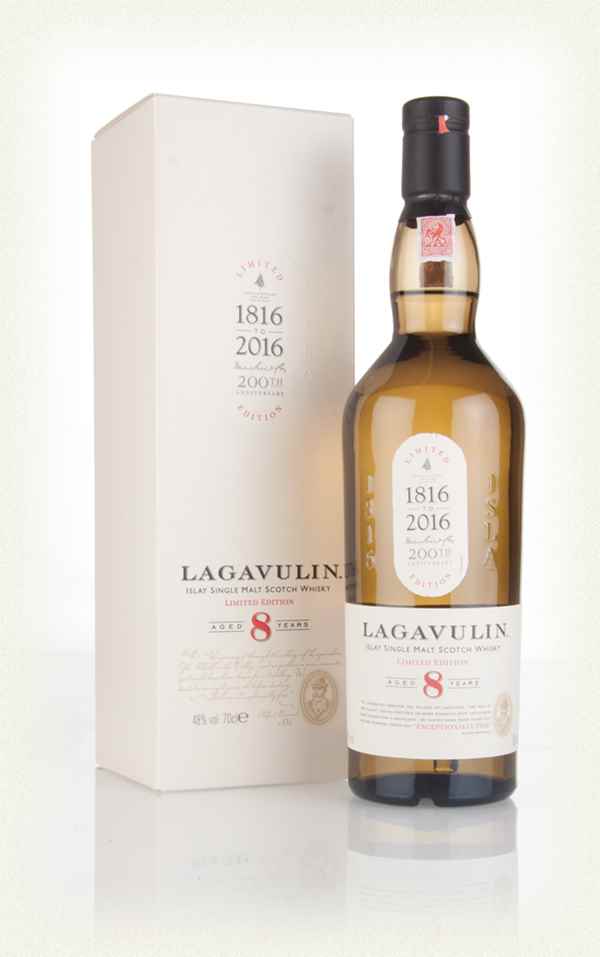
A latecomer to my tasting this month is the new Lagavulin 8 Year old (48% abv), launched to celebrate Lagavulin’s 200th birthday this year. It arrived just in time to be included. Now, this is a whisky I normally prefer with a bit more age and some added older sherry cask richness to it. However, I found this to be a refreshing malt despite the peat, smoke and toastiness packed into it. Don’t let the pale colour fool you – this is not insipid. The nose includes the usual smoke and peat but also sea air and oak sweetness plus cream cheese, apple peel and vanilla custard as well as a few floral notes. On the palate it’s spritzy, peppery, richly toasted, smoky and peaty with citrus zest bitterness and a bit of sweetness. Some mouth drying wood tannins and quite a vibrant finish. Would go well with smoked fish and meats and certain cheeses, I reckon.
Douglas Laing has launched a new expression, The Epicurean. There is a sample now awaiting me at their offices so will pick up and report next time.
Pernod Ricard’s third quarter results came out and, no surprise, brands seem to be suffering in China but then most spirits companies have the same problem. It’s largely down to a large reduction in gift-giving as the Chinese want to be seen to be tackling corruption in their system. Otherwise PR’s sales for the first nine months of the financial year were in a definite positive mode with good growth in India, Africa and the Americas. All helping to keep people in jobs.
An interesting move from Johnnie Walker which has launched ‘Earth Mode’ a new plug-in for Google Chrome that allows the user to calculate their online carbon footprint. By measuring online usage over four weeks, the plug-in calculates the user’s annual consumption of energy. Seems we don’t all understand how using the internet creates a carbon footprint, indicating “Each time that you use a website or search the internet it requires a lot of energy to provide the data.” Nice idea for encouraging environmental responsibility.
On that note I leave you till May when I look forward to my second Islay visit this year which is a great treat.
Slainte Mhath,
Caroline