The Whisky Ambassador Guide to: Pittsburgh, PA

There are few cities in North America that can boast as proud a Whiskey history as Pittsburgh, a story of brave and thrifty settlers making use of everything at their disposal, a story that’s continued much up to the present day.

Pennsylvania at the time was nothing like we see it today; isolated, hostile and untamed. Most settlers in Pittsburgh were farmers and depended on making an existence out of this land by growing grain. If the farmers made enough to support themselves and their families, they’d usually use the leftover to make what we now call Whiskey. Whisky was thus central to Pittsburgh, not only being used as a much-loved liquor, but also as a form of barter currency for goods and services.
Photograph by Cody Long

Photograph by Cody Long ©
Link in Photo- Unedited

In 1772, Gabriel and Isaac Walker migrated from Lancaster County, Pennsylvania towards near Scott’s Run and Robinson Run, near today’s Settlers Cabin Park. They farmed this land, and with the leftover grains, distilled whisky. Pittsburgh, at this point was the Whiskey distilling capital of the United States, with more than 4,000 stills in operation by this point. Pittsburgh was truly Kentucky before Kentucky ever was.

Unfortunately, George Washington, aware of the deep debts the United States was facing subsequent to the Revolutionary war, decided to approve an excise tax on liquor to raise revenue. Farmer-Distillers in Kentucky, Maryland, Virginia and Pennsylvania burned tax collectors in effigy, and launched attacks. Distillers in Pittsburgh were some of the worst offenders, with nearly 400 burning the Bower Hill mansion of the tax collector. 150 of these were arrested, the Walker brothers included amongst them. Two men were sentenced to hang, but eventually pardoned, one of them being Philip Wigle, a name you may recognise.


To appease the rebels, Presidents George Washington and Thomas Jefferson offered settlers 60 acres of land in Kentucky if they moved there and grew corn, giving birth to the Bourbon industry, which is primarily corn-based and aged in new, charred, white oak barrels as opposed to the white whisky produced in Pennsylvania, which wasn’t usually aged.

German immigrants were vital to Pittsburgh’s whiskey trade, led by Abraham Overholt, who settled in West Overton, over by Westmoreland Country. It was from there that Overholt began to distgill his whisky, Old Overholt. His grandson, industrialist Henry Clay Frick, was born there and Frick’s daughter even preserved many of the distillery buildings in the area, allowing today’s generations to visit West Overton and see how whisky was distilled in the 1800s.
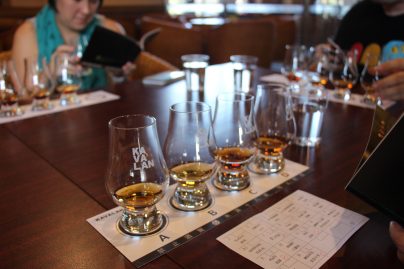
Photo credit to ‘Connie’ from Flickr ©
Link in Photo- Unedited

Unfortunately, Prohibition hit Pittsburgh hard, effectively ending whisky production for the next few decades. However, like those first settlers who didn’t skimp on using all their grain, several individuals have researched and recycled Pittsburgh’s whisky history and resurrected the memory of Peter Wigle, the whiskey rebel who Washington pardoned, by creating ‘Wigle Whiskey.’

The Meyer-Grelli Family opened Wigle in 2012, offering rye and wheat whiskies, bitters and gin, but still producing the white whiskey, as did its forebearers over 200 years ago. With the opening of Wigle and Stay Tuned Distillery in Munhall, Pittsburgh is indeed revisiting some of the Whisky boom it experienced by those first settlers. There’s also the Pittsburgh Whiskey & Fine Spirits Festival. With these in mind, it’s high time that Pittsburgh returned to being the natural Whisky capital that it was borne out of.

Taking place ahead of the Whisky Ambassador courses in Philadelphia and Pittsburgh, our guide will uncover some of Pittsburgh’s best Whisky spots.
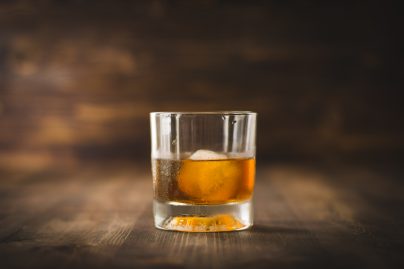
Photograph by Invaluable Official Whiskey ©
Link in Photo- Unedited

Wigle Whiskey

It’s little surprise that Wigle whiskey is going to feature prominently in any article about Pittsburgh’s whiskey history; Wigle started in 2012 and have been instrumental in instigating Pittsburgh’s ‘whiskey renaissance.’ Aside from whiskey, Wigle have started producing both rum and gin (including genever!), but they’ve continued to experiment with their Whiskey also, including experimental whiskeys recently included a four-grain variety, whiskeys aged in unique barrel woods, and a hops-infused whiskey.

Although their bottles can be a little on the pricey-side (perhaps pretty fair regarding their limited availability), you certainly don’t need to leave with a bottle to enjoy Wigle as a distillery. Wigle’s staff are friendly and certainly more than happy to tell you about the distillery’s and the area’s rich whisky-producing history, as well as the process behind the production of their whiskies, which isn’t all too different to how it was made back before the birth of the United States.
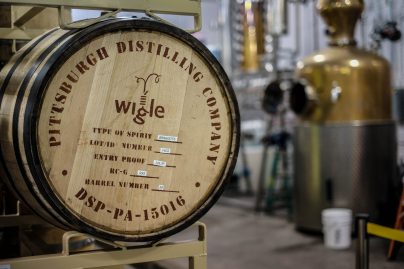
Photography by Jacob Caddy ©
Link in Photo- Unedited

McLaughlin Distillery

McLaughlin is a small-batch craft distillery located in Sewickley, Pennslyania. Each spirit is crafted by hand, and the distillery eschews expensive machinery or a large staff presence, with volunteers being an intricate part of the operation. The distillery doesn’t even have a sign on the building! Talk about having a moonshiner feeling.

Capitalising off of this reputation and marketing platform, the distillery offers High Quality liquors, including High Quality Moonshine distilled from grain, and more traditional whiskey fare, including two Bourbon whiskies and Pittsburgh’s infamous white whiskey of yore.

Mountain Top Distillery

Much like the other distilleries in the nearby area, Mountain Top specialise in spirits with history, aka Whiskey and moonshine, reflecting back on Pennsylvania’s spirited roots. Mountain Top, like Wigle Distillery, started in the early 2010s, before being taken over by Frank & Sarah Kudlack, a husband and wife team.

However, unlike many of the distilleries open across Pennsylvania, Mountain Top are firmly indebted into experimenting with traditional forms of whiskey, including by injecting coffee flavourings (Slow Ride) and maple-leaf flavours, (Jacked Up) alongside more traditional fare. Their moonshine offerings provide even more flavourings for those interested in America’s 1920s-era spirit, including Apple Pie moonshine, Pumpkin Pie, Lemon, Root Beer and ‘Twerked Tea,’ alongside other flavours.


Liberty Pole Spirits

Named after the ‘liberty poles’ that were planted throughout the United States by the rebels who opposed the new laws taxing whiskey, Liberty Pole pride themselves on Pittsburgh’s important whisky-producing past, choosing to symbolise the loving appreciation for a craft that is once again bringing livelihood to Pittsburgh. Eschewing the moonshine-centred approach that other nearby distilleries have taken, Liberty Pole offer a wide variety of whiskies, including Bourbon, Peated Bourbon, Rye Whiskey, Corn Whiskey, Bourbon Cream and the more traditional colour-less whiskey sold in Pittsburgh’s whiskey heyday.

The Whisky Ambassador Course will take place in Pittsburgh, PA on October 20th 2018

The course will also take place in Philadelphia, PA on July 14th 2018. 
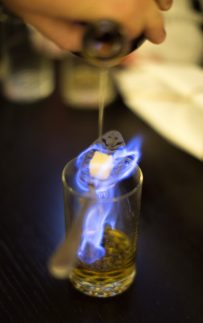
The Whisky Ambassador Guide: Absinthe

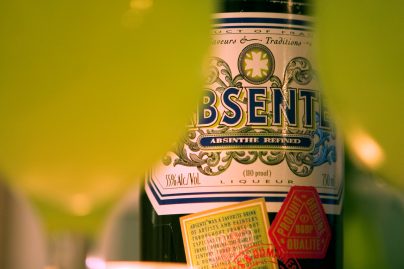
Driven by Lost Loch’s production of the first “Scottish absinthe” “Murmican” late last year,  some wondered what had driven the company to produce such an outdated spirit, particularly one with such a dramatic and notorious past. Moreover, surprisingly few self-designated spirits connoisseurs know anything at all about one of Europe’s classic spirits, especially considering its reputation for both opulence and the darker side of hedonism. Despite modern research and its disproving of this ‘dangerous’ name, we still see little consumption of gin and whisky’s more mysterious cousin. However, despite the dark exterior, we’re going to delve a little deeper into the character and history of the spirit, which has been largely banned until very recently. For those seeking adventure into what they drink, absinthe may well be the perfect tipple.

‘Murmican,’ named after a wicked traditional Scots fairy and modelled closely after the traditional Swiss recipe, will hopefully provide a welcome kick up the exterior for the potential of absinthe as a potential sales force, particularly as a result of its similarity in production to gin, and the wealth of gin distilleries that Scotland nowadays has in abundance. Made with grande wormwood, as in traditional absinthe, as well as green aniseed, fennel seed, star anise, bramble leaves and heather flower, ‘Murmican’ hopes to simultaneously harken back to the spirit of modernism rife throughout 19th century absinthe and introduce some Scottish spirit into the drink, pardon the pun.

Photography by Brendan Lim

Photograph by Brendan Lim – ©
Link in Photo- Unedited

So, What is Absinthe? 

For most countries, there’s little to no legal definition of absinthe, meaning that producers are often able to sell products that diverge quite drastically from the ‘traditional’ methods of production and label them absinthe.

Nonetheless, two distinct ‘traditional’ processes exist for producing absinthe.

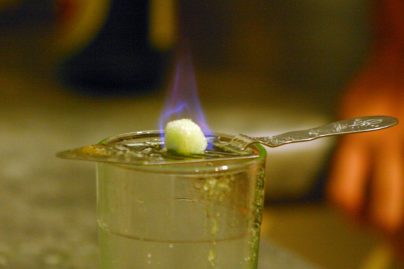
The first, via distillation, is similar to gin, in that Botanicals are macerated in distilled base alcohol before re-distillation to remove bitter bitter ingredients and principles. These give individual forms of absinthe their desired complexity and nature. This distillate, when it leaves the still, averages at about 72% ABV, which can be reduced and bottled off as ‘la blanche’ or la bleue absinthe.

Photography by Flickr user ‘scarymonkeyshow’ ©
Link in Photo- Unedited

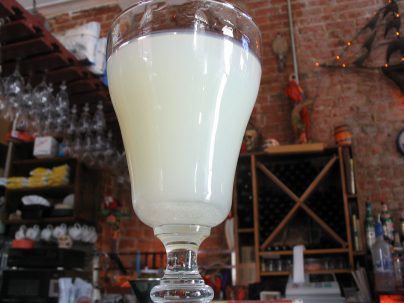
‘Traditional’ forms of absinthe, however, obtain a green colour from the chlorophyll contained within the whole herbs that are added typically during secondary maceration. These plants/herbs are likely to be petite wormwood, hyssop and melissa, amongst others. These steps provide the natural complexity typified by traditional absinthe, whilst the chlorophyll imparted by these plants acts similarly to tannins imparted to wine and brown liquors, including whisky. Like whisky, absinthe is said to increase in quality with age.

The second form of producing absinthe is via a cold-mix process, in a similar manner to how compound gin is made. This involves the simple blending of essential herbs and flavours as well as artificial colouring in simple commercial alcohol, in a manner similar to most flavoured vodkas.

History

Medicinal use of wormwood, the dominant and essential ingredient in absinthe, as juniper is with gin, dates all the way back to ancient Egypt, with wormwood extract being used. There was also likely a wormwood-flavoured wine (“absinthites oinos”) being served in ancient Greece.

The first use of wormwood in the more modern sense of distillation, containing green anise and fennel, dates back to the 18th century. By popular legend, Dr. Pierre Ordinaire, a French doctor in Couvet, Switzerland, created absinthe as an all-purpose medical remedy, later to be passed onto the Henriod sisters of Couvet, who continued to sell absinthe as a medicinal elixir. ‘Major Dubied,’ having acquired the formula from the sisters, was the first to open the first absinthe distillery, building a second distillery in Pontarlier, France.

Photograph by Flickr user ‘jb’ ©
Link in Photo- Unedited

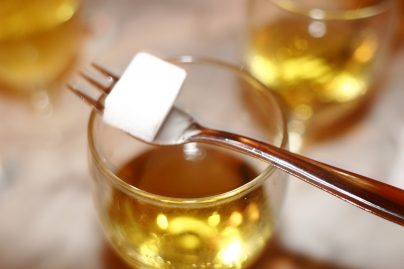
From here, its popularity steadily grew until it was given to French troops as a malaria preventative, bringing the drink back home with them. Eventually, absinthe’s popularity grew enough with bars, bistros, cafes and cabarets that 5pm came to be known as ‘the green hour,’ owing to the drink’s light green complexion. By 1910, French citizens of all classes and social stature were drinking 36 million litres of absinthe a year. The drink was also exported to other countries, and became similarly popular in Spain, the United Kingdom, the United States and the Czech Republic.

Fall from Grace

Unfortunately, it was absinthe’s growing popularity that forged its reputation as fomenting violent crimes and behavioural/social disorder. Edgar Degas 1876 painting L’Absinthe helped to reinforce the reputation of Absinthe drinkers ‘sodden and benumbed.’ It was around this period that Absinthe developed its reputation as being a hallucinogenic and leaving drinkers worse off than other spirits, with various psychiatrists claiming that heavy drinkers frequently experienced rapid bouts of hallucinations, including the notable absinthe opponent Valentin Magnan.

Photography by Flickr user ‘Tim © Link in Photo- Unedited

By 1905, Jean Lanfray, a Swiss farmer murdered his family and attempted to take his own life after drinking absinthe. Despite Jean being an alcoholic who had also consumed vast quantities of wine and brandy, absinthe was held as the culprit, and by referendum in 1908, the banning of absinthe was written into the Swiss constitution. Many countries followed suit, with the Netherlands following in 1909, the United States in 1912, and France in 1914, although notably, Spain and the United Kingdom did not follow suit. However, in most countries, both sales and consumption of absinthe fell rapidly, leading to the quiet death of absinthe production by the 1960s across Europe.

Photography by Jared Kelly © Link in Photo- Unedited

Revival

Due to the lack of a ban in the UK, Czech absinthe began to be imported there in the 1990s. Whilst its popularity grew, many absinthe connoisseurs considered these ‘bohemian’ absinthes as of inferior quality. However, by 2000 La Fée Absinthe began the first producers in France since 1914. Originally designed for export, since the reversal of the ban in 2011, Absinthe has been available in France as in many other nations across Europe, largely as a result of the ban’s incompatibility with the European single market.

Consequently, Switzerland and France have resumed producing quantities of absinthe, and in 2007, French company ‘Lucid’ became the first company to legally export absinthe to the United States since 1912. In this light, Lost Loch’s creation of ‘Murmican,’ couldn’t come sooner, hopefully helping to bolster and charter a spirit with an unusual history, both mysterious and sublime. With gin undergoing such a drastic renaissance in Scotland, it can only be so long until unusual spirits such as Absinthe make use of Scotland’s vast spirit-making potential. Indeed, for those who seek to walk down the path less wandered, Absinthe may just be the prime choice as an avenue alongside more traditional fare such as whisky or gin.

For more information on the processes behind distilling and producing some of your favourite beverages, take one of our courses. Our whisky ambassador courses can be found here, and our Gin Ambassador courses are coming to worldwide audiences soon!

Words by Liam Harrison

The Whisky Ambassador Guide to English Whisky

With the resurgent worldwide interest in Scotch, our southern neighbours’ interest in whisky sadly often doesn’t get a look in. However, England does have a history of producing single malt, at least until 1905 with the closure of Lea Valley distillery.

However, it wasn’t until 2003 that St. Austell Brewery & Healey Cyder Farm announced the first production of a “Cornish” single malt “Whiskey.” Since then, numerous distilleries started up, and, as of 2017, have served as a welcome addition to the UK spirits trade.

In the spirit of Saint George’s Day, we’ve put together a list of some of the staples of the Whisky business in England.


Spirit of Yorkshire Distillery

Tasked with creating Yorkshire’s first single malt Whisky, the Spirit of Yorkshire Distillery has sought to blend the traditions and techniques of Scotch, amending them with use of locally, sustainably produced elements. All barley and spring water used in the production of Spirit of Yorkshire have been grown and sourced from the local family farm. Featuring some of the largest copper stills outside of Scotland, production was started in May 2016.

As in Scotland, spirit produced has to be matured for three years to qualify as Whisky. However, whilst the production hasn’t quite reached the legal qualification for Whisky, various formulations of Spirit of Yorkshire’s maturing spirit is available for purchase until that date. As Yorkshire is a large and disparate area with its own vibrant culture and heritage, it’s an exciting wait to sample Yorkshire’s first whisky.

Cooper King Distillery

Similarly located ten miles outside of York, Cooper King took influence from a very different source to Scotland: Tasmania. Having visited eight distilleries across Tasmania, Abbie & Chris, the distillery founders, decided to move the innovative and distinct approaches of the antipodeans back to England and set up Cooper King in their light. As such, the Tasmania-sourced stills are unlike any other in Europe.

Nonetheless, Cooper King’s base is firmly in Yorkshire, being named after Chris’ great-great grandfather, who documented Chris’ ties to Yorkshire. All Barley is similarly 100% sourced from Yorkshire. With an emphasis on taking a green and sustainable approach, Cooper King’s plans are to run on 100% green energy, planting a tree for every bottle sold and planting a woodland and orchard on site.

Cooper King’s whisky is still maturing, but their gin will be available to all founders very soon, within Spring 2018. We for one can’t wait to sample their produce!

Cotswolds Distillery

Located in the beautiful North Cotswolds, Cotswolds Distillery was formed from a desire to honour the local heritage, using local raw materials, traditional distillery techniques and create a home for English Whisky. To this end, the Distillery is located in a village, with all staff members living nearby, the neighbours helping with the bottling and fruit peeling, and the spent grains from the mash going to feed the local cows.

Whilst Cotswold Distillery produces everything from Gin to Absinthe, its won particular praise for its own Single Malt Whisky. A rich, fruity and easily drinkable whisky, the Cotswold Single Malt has flavours of tannin-rich malts and dark, spicy fruit, tasting a little like marmalade before finishing in a treacle-esque, long, resinous finish. Cotswold have also filled a variety of different casks, planning to release different bottlings during the coming months and years.

Isle of Wight Distillery

Currently the only distillery on the Isle of Wight, founders Xavier and Conrad wanted to express the unique properties of the Island into their spirits. All spirits are cut with local spring water to deliver layered complexity and smooth delivery characteristic of the island way of life.

IoL Distillery have been laying down Whisky since 2015 with Isle of Wight barley, with the spirit left to mature in both Bourbon and white wine casks before being moved to either sherry, madeira, cognac, port or even peated whisky casks. Importantly, whilst their whisky isn’t available commercially, their gin produce is, and a number of stockists on the island and throughout mainland UK now stock them.

Hicks & Healeys Distillery

Whilst a Cider farm doesn’t sound like the best place to find whisky, company founder Kay and David were the first to begin selling English Whisky, notably producing it in “Cornwall’s first distillery in 300 years.” Supposedly, every bottle produced by the Cornish distillers will vary slightly. Their whisky, at seven years old, started selling in 2011, also advertised as England’s oldest whisky.

For a list of the locations you can take the Whisky Ambassador course in England, click here.


Whisky Ambassador Guide to Frankfurt

Despite German-made whisky’s late start, Whisky in Germany is still a relatively recent phenomenon. Having only started in the last 30 years, the fan base of the spirit is still fairly large. There are currently 23 distilleries in Germany producing whisky in a wide variety of styles: single malts, blends, and bourbon styles. Apart from national distilleries, there is also great interest in the traditional production regions, especially in Scotland. More recently, Frankfurt has evolved to become a primary German hub for “Uisge Beatha“. Aside from The Whisky Ambassador training courses taking place in Frankfurt, there are plenty more whisky-related things to do in and around town.

InterWhisky Exhibition

InterWhisky is a 3 day event being held from 30th November to 2nd December 2018 in the fabulous Gesellschaftshaus Palmengarten venue in Frankfurt, touted as being a must-see for whisky beginners and pros. Both Whisky giants and ever smaller, independent distilleries from home and abroad come to Frankfurt for the annual family reunion.

In 2016 35 exhibitors presented their companies and products at InterWhisky. 8,000 visitors came to discover the latest trends and innovations of the industry. The main Whiskies exhibited will be from Scotland, Ireland, Canada and USA, as well as some German whisky distilleries, companies, touristic associations, whisky accessories. Welcomed are trade visitors as well as the public.

Whisky Shops

Whisky Spirits – Wallstraße 23, 60594 Frankfurt am Main – http://www.whiskyspirits.de

Whisky for Life – Fahrgasse 6, 60311 Frankfurt am Main – http://www.whiskyforlife.de

Die Whisky Kiste – Berliner Str. 39, 60311 Frankfurt am Main – http://www.diewhiskykiste.de

Looking for some of the finest whiskies available in Germany? Look no further than these Frankfurt stores. They all have an exquisite selection of Scotch Whiskies, Bourbons, as well as other international and local Whiskies. Due to the staff’s combined decades long professional experience and passionate interest in the production and tradition of Scotland’s national drink, you can be sure to get the best consulting whether you are new to the world of whisky or already a seasoned whisky veteran. Both Whisky Spirits and Whisky for life offer tastings and workshops. For more information please visit their respective websites.

Whesskey Distillery

Only an hour’s drive outside of Frankfurt you find the distillery Höhler, produces of exquisite German whisky since 2001. “Whesskey” is a play on the word whisky and Hessen, the state in which it is produced. Whesskey has subsequently gone on to be not only one of the most popular whiskies in Germany but has also built up a reputation internationally. Well known whisky critic Jim Murray named their first whisky “Best Whisky of the European mainland” in 2004. In addition, they also offer regular tastings and guided distillery tours. Within only an hour’s drive of Frankfurt, Höhler distillery  is a perfect stop to complement our upcoming Whisky Ambassador Frankfurt course. You’ll find more information on Whesskey’s history and the process behind production at: https://www.brennerei-hoehler.de.

Photo by Wikipedia user: ‘Hammersbach’ ©
Link in Photo- Unedited

TWA’s Best Distilleries of Speyside: Scotland’s Whisky Triangle

Photography by Iain Hinchcliffe- Link in Photo

Scotch whisky has changed a lot in recent years, and, as has been given considerable coverage, whisky’s geographical origins within Scotland have started to matter less and less to the nature of the whisky itself. Speyside whiskies are no exception to this trend.

Whilst whiskies from what is by far Scotland’s most prolific whisky producing area have always been amongst Scotland’s lightest and ‘sweetest’ single malts, more recent expressions are at the forefront of Scotland’s lightest drams. Lacking the peat of Islay, the salinity and ocean breeze of the islands or the fruity, perfumed nature of Lowland whiskies, Speyside are sweeter; more subtle. This is in stark contrast to traditional Speyside fare, which would be nowadays much more similar to a Highland malt: robust and peated. The sweet, un-peated nature of modern-day Speyside whisky owes much to the area’s low mineral content. Located next to the Grampians, the area’s granite allowing for some of Scotland’s softest waters, mixed with very few areas with significant amounts of peat.

Moving on from the technical aspects, with over half of Scotland’s distilleries tucked into its borders, Speyside more importantly makes some of Scotland’s damn finest and most famous whiskies. For those pursuing the softer side of whisky above Islay’s gut-punch of TCP aromas, we’ve put together the best choices for taking your tour around the Jewel in Scotland’s whisky crown, well ahead of the exciting annual Spirit of Speyside festival taking place May 3rd-7th, an event that’s sure to bring much of the spotlight onto Scotland’s most prolific Whisky region.


Glenfiddich

At the risk of sounding cliché, Glenfiddich is one of the undisputed giants within Scotch whisky. No matter what bar you’re in the world, you’re bound to see at least one bottle at Glenfiddich. It’s this popularity and pervasiveness that’s turned up a lot of noses in the whisky world, but Glenfiddich themselves have some wonderful drams, from the gorgeous 15 years old to the pricey 21 year old Gran Reserva. Moreover, Glenfiddich offer tours of the epicentre of Scotch whisky in Dufftown from just £10, which includes a stop off in one of the most impressive distillery tours available, only topped off by the lovely ruins of Balvenie Castle. Importantly, Glenfiddich are also the only distillery to offer a tour detailing the whole process, all the way from barley to bar.

Macallan

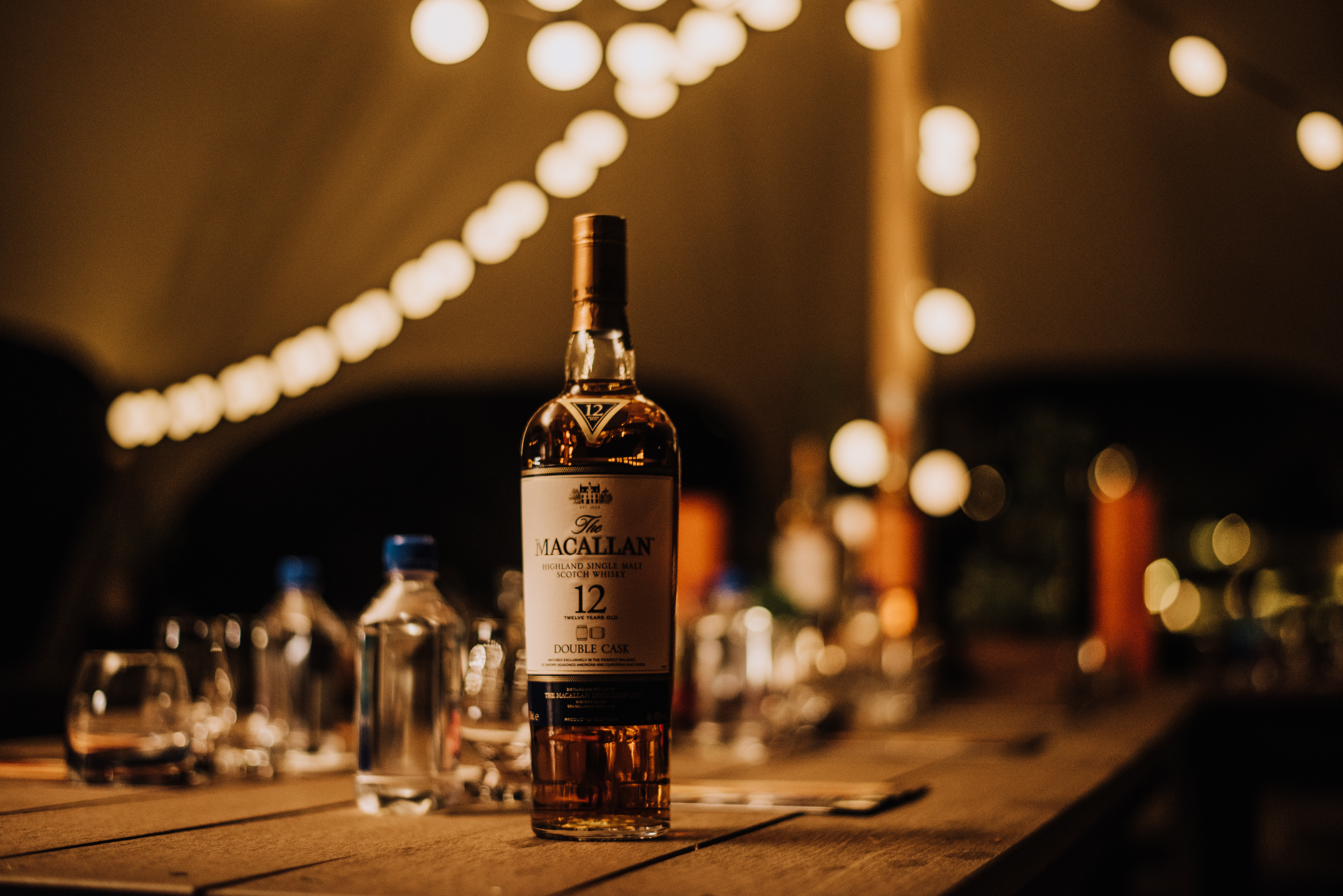
Macallan distillery deserves a spot for being one of the foremost whiskies that encompasses what the ‘Speyside’ taste is all about: Light, florally, mellow and smooth. Their sherry oak and fine oak are both lovely, mixing in citrus-ey spices and toffee notes, and you can expect plenty of this on the Macallan tour. The distillery was only recently renovated and offers one of the finest you can have in Speyside, prices starting from around £15 per person. That being said, with one of the finest distillery shops in Speyside, you’ll be inclined to spend much more at the tour’s end…

Cardhu

Located in the ‘heart of Speyside,’ the Cardhu has a unique history as the only distillery started by women. Its light-natured 12 year old is an excellent starter, with the 15 and 18 year olds offering something more complex. Nonetheless, Cardhu’s signature is a sweet and spicy mix, with vanilla at the forefront in the tasting notes. Of all the whiskies to try, the 18 year old in particular is one of Speyside’s smoothest, but the others aren’t to be sniffed at. Cardhu offer a £9 tour, but others can be as low as £5, Cardhu is one of Speyside’s smallest distilleries, but also one of its mightiest.

Glenlivet

Licensed in 1824 with the distillery founded in 1858, Glenlivet gives standard, small-group distillery tours every 20 minutes, which last 45 minutes and are, most importantly, free! Other tours come recommended, however, and start at £35pp. These should be pre-booked however, as they’re likely to fill up fast on the day. On these tours, you’re able to fill your own bottle straight from the cask, before corking, capping and labelling it.


Aberlour

Of all the whiskies distilleries in Speyside, one in particular that can brag of the fervour and professionalism of its tour-guides, is Aberlour. Aberlour distillery sits in a wooded hollow beside the River Lour, and it is one of the most attractive distilleries in Speyside. During the tour, you get a chance to taste the “sweet worts”, the beer-like liquid distilled to produce whisky spirit.

You’ll spend the last hour of the tour tasting 5 different “expressions” of the Aberlour Malt in the tasting room, as well as some of the pure spirit taken direct from the still. If that still isn’t enough, the Mash Tun pub is also nearby, which will be sure to make you merry if the tour hasn’t done enough.

Glenfarclas

To this day, Glenfarclas is one of very few remaining independent, family owned distilleries still managed by the family itself. To this end, their tour does its best to put across a rich, intimate and personal family history of the distillery and how the business evolved.

Their range of traditional Speyside single malts includes the 10, 15, 21, 25, 30, and 40 years old, all renowned for a full bodied, smooth and heavily sherried style. The tasting room features beautiful wood panelling salvaged from a nearby sunken ship, with the room being designed out of the ship itself. That being said, there’s little glam to the tour, which just lets the history and location of Glenfarclas do the talking. Moreover, such a rich history is only furthered by some of the best tour guides in the business, whose warmth and hospitality is famed amongst whisky distilleries.

Benromach

Benromach have been making Benromach since 1898 using the spring water from the nearby Romach Hills. The tour itself includes almost every part of the whisky production process as their friendly tour guides show you around what surely must be one of Scotland’s smallest bobby mills, followed by the mash tun, wooden washbacks, copper stills and the warehouses. Benromach certainly pride themselves on the small scale of their setup, with a small, manned and un-computer-led production process. Better still, like Glenfarclas pride themselves on having some of the friendliest and warmest tour guides in the business, and for both a warm welcome and some of the best Whisky in speyside, we recommend the Benromach on any tour of Speyside.


Sadness, Moving On and New Releases in Whisky

Some sad news and some happy news this month.

The death was announced this last week of Dr. Jim Swan. His name will perhaps be unknown to many consumers but they owe him a great debt for all he did for Scotch Whisky. To the whisky industry he was a fount of all knowledge and will be a sore loss. I first met him aeons ago as a young assistant brand manager when he was a founder of Pentlands Scotch Whisky Research. He came into Teacher’s to speak to our marketing team about identifying aromas and flavours and training the nose. It’s a session which has remained with me and enthused me ever since. In his career he was a chemist, analyst, blender, maturation expert, researcher and developer, inventor, lecturer and more with a degree in Chemistry and a PhD in Chemistry and Biological Studies. Dr Swan was a Fellow of the Royal Society of Chemistry and was awarded Fellowship of the Institute of Brewing and Distilling. He worked as a consultant to many and, right up until his death, was working with some of the new distillery projects opening up in Scotland, though he shared his vast knowledge with distillers worldwide from Taiwan via India to the USA.

In happier news, it was also announced that Master Blender Rachel Barrie will be leaving Beam Suntory to head for BenRiach Distillers, owners of BenRiach, The Glendronach and Glenglassaugh distilleries.   Rachel began her career at the Scotch Whisky Research Institute (learning from Dr. Jim Swan), then moved to the Glenmorangie Company for some 16 years before moving to what was Suntory’s Morrison Bowmore Distillers (now Beam Suntory)  where she has been for five years. This will doubtless be an easier commute for Rachel who lives in Edinburgh and bring fresh interest and challenge to an already illustrious career. I must confess to a bit of nervousness when I heard that Brown-Forman had taken over BenRiach Distillers. The BenRiach team has done lots of good things with one of my old brands, The Glendronach and I wasn’t sure what might come next.  However, it’s good to know it will be in Rachel’s excellent hands now.

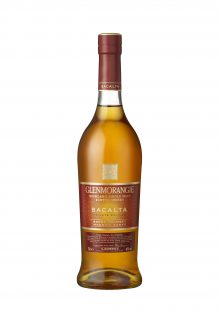
A recent welcome sample was from Glenmorangie. It’s Edition VIII Bacalta (46% abv) from the Private Edition series and it’s the eighth in this  special range. The last one was Milsean which was one of my favourite whiskies from 2016. The name Bacalta means “baked” in Gaelic reflecting the fact that the whisky was finished in Malmsey madeira casks, which are sun baked, after primary maturation in former bourbon barrels. The casks were specially commissioned and made from air-dried US oak (US oak for casks is most often kiln-dried) and then heavily toasted on the inside. Once filled with a selected Malmsey madeira they were tended for 2 years then emptied and shipped to Scotland. So what does it taste like?

Appearance: Medium gold with an amber heart. The tears are slow to develop and then quite widely spaced.

Nose: Spicy for Glenmorangie and notes of warm plums; ginger; some soft oak vanilla; creamy custard and honey. With water it noses as sweeter and creamier with more vanilla; milk chocolate and a dab of barley sugar or syrup. There is more toffee/caramel as it opens out.

Palate: some smokiness/toasting and fine oak; bit of licorice; some sweet spices but also dry and a little pinch of salt; touch of vanilla and oak tannins, ginger and malted cereals and an almondy/marzipan note.

Finish: quite long, luscious with some fruit, yet turning dry and with more oak. 

This one is priced at about £79 per bottle which seems distinctly reasonable and is indeed a dram to savour.

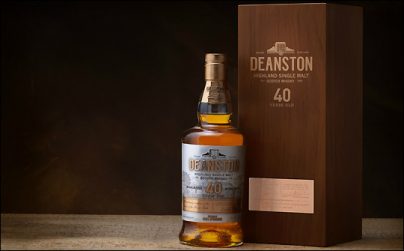
In other industry happenings, Deanston in Stirlingshire has released a 40 year old expression (45.6% ABV and not chill-filtered). The whisky was  matured in whisky refill casks before spending the last 10 years of its maturation life in Oloroso sherry butts. The bottle is a bespoke one as is the capsule with etchings that feature the distillery’s history as a cotton mill. The wooden topping on the cork contains a recessed Deanston coin once used in the cotton mill community. The bottle has textured metal labels and a leather -lined box with plaque. Fewer than 500 are distributed globally at a price of around £1,000 per bottle. The price may deter all bar the better-off but the distillery and the  surrounding community are well worth a visit for all the history and charming location. Plus, there are plenty of other expressions which are less expensive.

Loch Lomond Group, independent distiller, has announced the launch of a new global travel retail range at Glasgow Airport. The new collection features two single malt Scotch whiskies, Loch Lomond 12 Year Old and Loch Lomond Inchmurrin Madeira Cask Finish, as well as the blend, Loch Lomond Signature, and Loch Lomond Single Grain. A tasting table will be available at Glasgow Airport during February and March, enabling World Duty Free’s shoppers to sample the new range and encouraging travellers to take a little piece of Loch Lomond home with them. The various expressions are priced between £25 and £75 per bottle.

In a Budget submission to the Treasury, the Scotch Whisky Association (SWA) sets out the unfairness of the current level of tax on Scotch Whisky – 77% on an average priced bottle – and calls for a 2% cut in excise duty.
The SWA is calling on the Chancellor to ‘Stand up for Scotch’ in the Budget on March 8 to support a strategically important industry, benefit consumers and boost public finances. A fair tax for whisky is also likely to boost spirits revenue to the Treasury. Following the 2% cut in spirits duty in March 2015, spirits revenue in 2015/16 increased by £123 million to £3.15 billion. Spirits revenue is now £155m a year higher than when the spirits duty escalator was scrapped in 2014. Seems like a no-brainer really but will common sense prevail? We’ll find out soon.

The big news of the month is that Jim McEwan, who retired from Bruichladdich in 2014 has joined Hunter Laing in the project to build and commission its distillery at Ardnahoe on Islay. I’m told it’s been Islay’s worst kept secret! Jim has spent some time in late 2016 in Australia helping a gin distiller but this keeps him back on home turf, as a consultant who will help with the design and oversee the build of the distillery as well as training the staff who will run the operation. Many of us knew he wouldn’t  just “retire”.

Speaking of new spirits, there are at least half a dozen of Scotland’s new distilleries expecting to begin production this year so plenty more news to look forward to in 2017. Also, there are two new releases from Laphroaig. One has literally just arrived so now too late for this month and the other one should be with me soon so I’ll do a compare and contrast next month if the other arrives in time.

Save

Save

Save

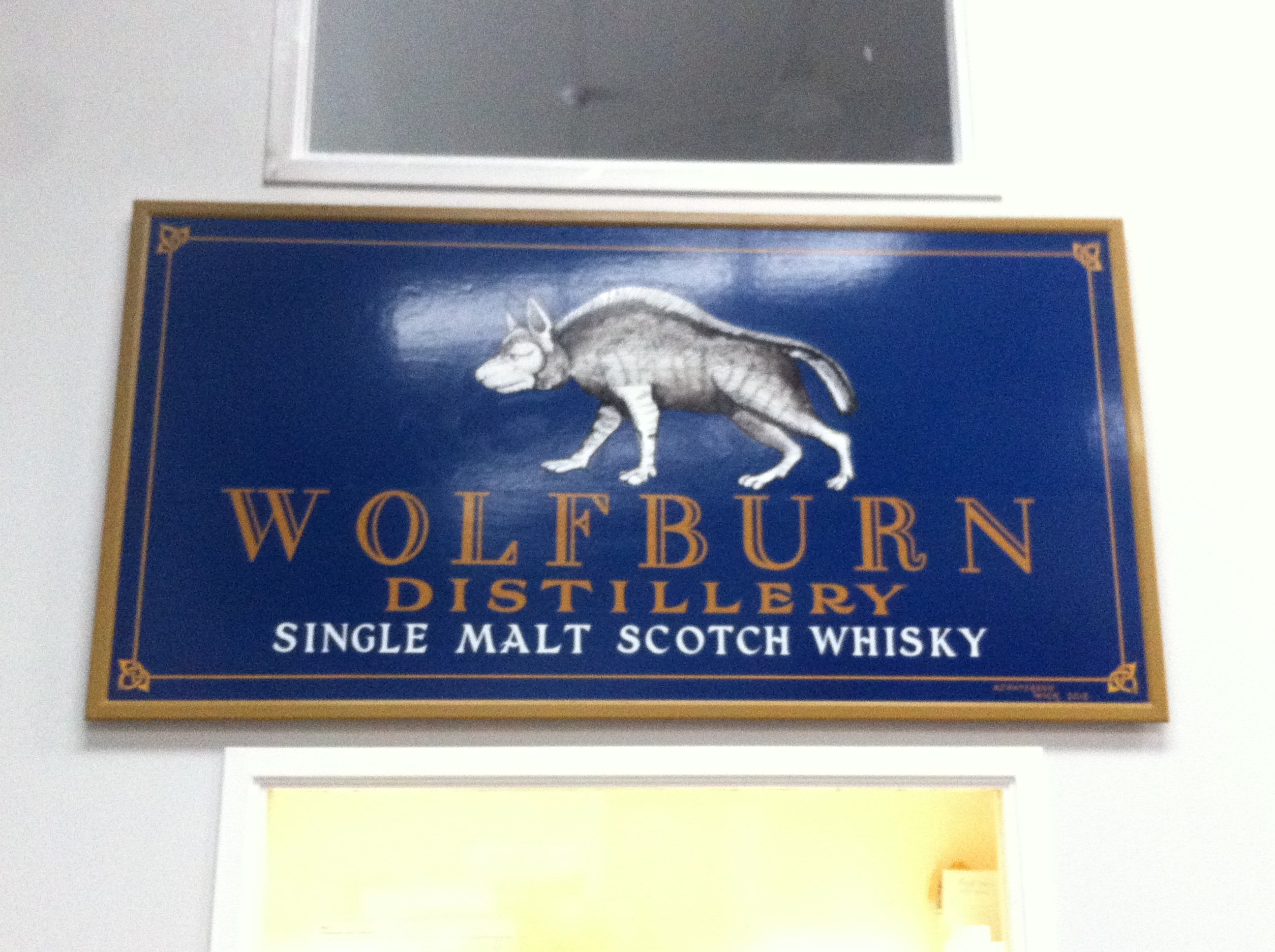
Wolfburn, A Legend is Born

Some say that fortune favours the bold, but at the revived Wolfburn Distillery it is their belief that ‘Fortune favours the Brave’

Wolfburn Distillery is situated in Thurso within the Highland county of Caithness and is currently the most northerly Whisky Distillery on the Scottish mainland.

The last time Whisky was distilled in Thurso, Queen Victoria was still on the throne of Great Britain.  This month marks the long anticipated launch of the first bottles of Whisky from this revived Scottish Distillery in over 150 years.

The original Wolfburn Distillery was established by William Smith’s Distillers in 1821 and in its heyday was one of the largest producers of Whisky in Caithness until it’s unfortunate demise in the 1850’s.

Unbelievably, very few bottles of this famous Highland dram ever made its way south of Caithness due to its popularity and the incredible local thirst for Uisge Beatha.

Unfortunately nothing of the original distillery or its Whisky remains from this golden era. But at the heart of every great dram there is a great water source and by good fortune that water source (The Wolf Burn) was re discovered in 2011 by the current owners Aurora Brewing Ltd. The Legend of Wolfburn Distillery was finally re-born!

wolfburn 3

The Wolf Burn has been flowing for thousands of years across the Caithness wetlands

A wild place circumscribed by rugged coastline, and defined by the turbulent North Sea. It’s an ancient place where Vikings once tread and Wolverine roamed.

It is a remarkable environment anchored by the largest expanse of blanket peat bog in Europe, with exquisitely pure water coursing through it’s veins.

Today, the new still men of Wolfburn are hand crafting Whisky once again in the ‘Old Style’ but this time for a new generation of Whisky drinker.   Distillery Manager Shane Fraser is charged with the responsibility of reviving this sleeping wolf and with 23 years experience and a passion for perfection, the future legacy of Wolfburn is surely in very safe hands.

wolfburn 2

Shane’s initial thoughts on style was to create a light, fragrant dram, typically uncharacteristic of a Scottish coastal dram.  He favours a long slow mash with a prolonged fermentation period and a very gentle distillation plan.

The final dram is simply outstanding.  Light and fragrant on the aroma, sweet with a big Malty base that coats the palate, with a subtle delivery of peat.

A pleasure to behold.

For the last three years Whisky has been maturing in their Thurso warehouses, slowly gathering character.  The spirit has been gently reawakened and now finally, Wolfburn is back!

Long live Wolfburn!

Leigh McGrotty

Leigh is a Whisky Ambassador Trainer, and is normally based out of Kuala Lumpur. She can be contacted on leigh@15pl.co.uk

New Beginnings

I hope everyone had happy new year celebrations. The whisky world doesn’t stop much (okay – two weeks off over the festive period) but more new things have been happening in these first few weeks of 2016.

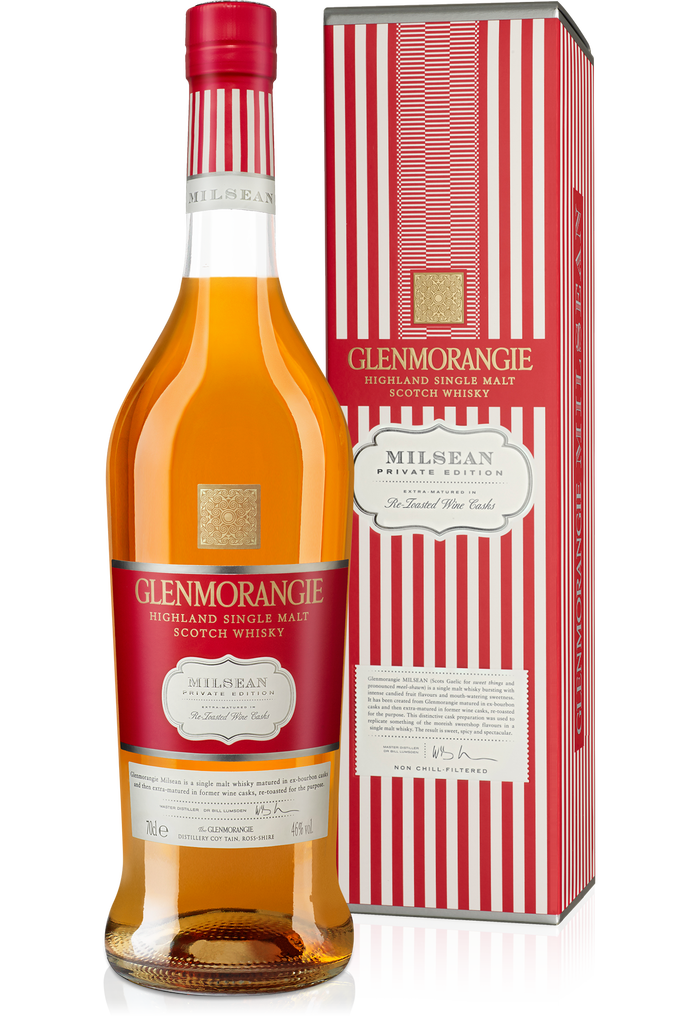
Already this month there have been some new releases. The first sample to hit my desk is from Glenmorangie. This is Milsean (pronounced Meel-shawn) at 46% abv, the seventh in the Private Collection series. An enticing rich gold colour with coppery glints, the tears on the glass are widely spaced, swift at first then fat, sticky and clingy. I nosed it initially on opening the small bottle and was tempted by a waft of coconut and toffee. On trying it properly from the glass there is the addition of tropical fruit juice, more toffee and sweet spices, a touch of sultana and vanilla. With water it is creamier, with a waft more of oak, tinned peach syrup and sponge cake. On the palate it is lightly unctuous at first and is sweet, spicy, fruity (candied peaches anyone?), citrus peel and quite rich with some mild oakiness and herbs. The finish is quite long with wood, herbs and sweet notes – and drying but with a lingering sweetness at the edge.

Glenmorangie-Milsean-0.75L-GB-U-P-EC-1

This whisky received some further maturation in heavily toasted Portuguese red wine casks after its main maturation in ex-bourbon casks. It’s for sale through specialist stores at about £75.99. A great dram. I bought a bottle of the Glenmorangie Midwinter Night’s Dram before Christmas from their online shop. One for me and one for my wee brother, who usually has good taste in whisky though he doesn’t like the very peaty ones. Was a bit vexed to see it also on offer in Sainsbury’s before Christmas for rather less than I paid for it online!

Other recent new releases are Octomore 7.4 from Bruichladdich – that’s the peaty one. A sample is awaited. There’s also The Glendronach Grandeur 25 from Benriach Distillers. This is batch seven in the series and is a very special 25 Year Old at 50.6% abv, matured in oloroso sherry casks. As there are only 1180 bottles of it I’m not expecting to see a sample but will doubtless be in raptures if I do.

Longmorn, The Distiller’s Choice, a no age statement Longmorn to replace the 16 Year Old is also recently released by Chivas but no tasting sample as yet. I’m hopeful so more on that in February!

Meantime, Wemyss Malts have brought out a whole new range of their single cask expressions representative of Scotland’s whisky regions and the new names are:

“Sizzling Charcoal” 1997 single cask from Bunnahabhain Distillery, Islay,

“Coastal Confection” 1996 single cask from Bowmore Distillery, Islay, Cask Strength

“The Highland Mariner 1997 single cask from Clynelish Distillery, Highlands

“Fallen Apples” 1989 singe cask from Glen Garioch Distillery, Highlands

“Barrista’s Dram” 2002 single cask from Craigellachie Distillery, Speyside

“Toasted Anise” 1996 single cask from Glenrothes Distillery, Speyside.

This column is already long enough so maybe more on those next time. I know one sample will be with me soon.

I think my best laugh of the new year so far was on hearing recently about the new edition of Effen Vodka. I don’t follow vodkas so much so this brand had missed me till late last year. As a Scot, it doesn’t seem like the best choice of name… Matt McGinn and The Big Effen Bee anyone?

As of 26th January, the Scotch Whisky Association has opened its new offices in Edinburgh’s Quartermile district after over forty years in the Georgian grandeur of Atholl Crescent. I’m sure the new offices will reflect the prestige of Scotch Whisky and how contemporary and even more relevant it is in the drinks world than when the association was founded some 100 years ago. I wish them enjoyment of their new space and many more years protecting Scotch round the globe. I think we will still need them for some time to come.

On Thursday 4th February, whisky legend, James McEwan, will be hosting a Bruichladdich tasting at Sloan’s in Glasgow in aid of the Fraser Shaw Trust which raises funds for multiple sclerosis charities. There’s also live music so it should be a great night with a chance also to hear James tell stories. There’s more info on the Bruichladdich website at http://www.bruichladdich.com/article/jim-mcewan-tasting-in-glasgow .

Lastly, the first full spirit run at the new Waterford Distillery in Ireland should have run through this month. I hope to be talking to CEO Mark Reynier soon to find out more.

Will see you gain in February, well after Valentine’s Day and preferably with some more notes on new whiskies.

Caroline

Caroline Dewar

Seasonal Joy & Craft Whisky

Hello!

First of all I forgot to mention last month the winners of categories I helped to judge in the SLTN Awards back in November. I helped on Whisky Bar of the Year and the two restaurant awards, Casual Dining and Fine Dining. It was a clean sweep for Glasgow in all three categories. As a non-Glaswegian I can say there was no agenda there! The one that matters to us here is Whisky Bar of the Year which went to The Bon Accord on North Street. They’ve come within a whisker of winning a few times and they’d introduced some great new developments since they last entered in 2013 so were worthy winners. A close second was The Pot Still, also in Glasgow. I do hope they try again. If you’ve not seen who all the winners are yet, a full article can be found at

http://sltn.co.uk/2015/11/06/nightclub-boss-takes-top-industry-award/ .

Despite it being the end of the year when we’re all thinking about time off there are still new whisky expressions being launched. It’s also awards season with Whisky Magazine’s Icons of Whisky announced recently and the Whisky Advocate annual awards in the US too. The Whisky Advocate ones announced so far are on www.whiskyadvocate.com as they drip feed them at one a day. The Icons of Whisky winners can be found at http://www.iconsofwhisky.com/2016/scotland/ – yes they do call these the 2016 awards – or http://icons.whiskymag.com/files/amf_paragraph_publishing/project_10/WM_Awards_Scotland_PR.pdf. I will comment on only a few to say that Ardbeg are deserving winners of Visitor Attraction of the Year and I’m delighted to see Dr. Bill Lumsden as Master Distiller / Master Blender of the Year. On the off-trade side two well-known names in Cadenhead’s (multiple outlets) and Royal Mile Whiskies (Online Retailer) were winners. Cadenhead’s have been of great help to me this year and the folks at Royal Mile Whiskies, whether in-store or online, continue to be great people to deal with.

One of the Icons awards is for Craft Distillery. No disrespect at all to the winner as I heartily applaud that venture. It’s the word “craft” I find annoying and I see others are still getting hot under the collar about it too in some of the online postings I’ve read recently. I have to agree with Stephanie Macleod, Master Blender at Dewar’s who politely stated in an interview/discussion a while back, that all distillers practise craft, as in the love, attention and care they put into the ingredients and production. They wouldn’t be where they are if they didn’t. It’s just that some are much bigger than others and maybe use more computers for certain parts of the process. Really, we’re meaning very small operations so can we please get away from “craft”. Size does not imply craft. Would artisanal be a better word? Or micro-distillery? That has less romance about it than craft which has us harking back to centuries past and some warm, fuzzy notions of smaller and more local being better. It’s not. It’s just smaller. Large and small take good care to craft their product. End of.

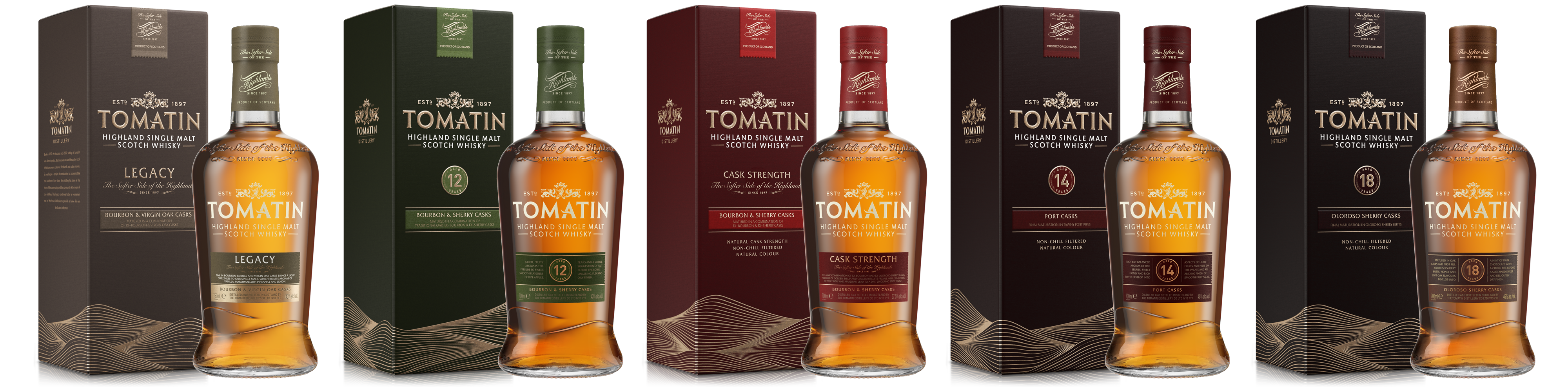
Recent happenings on the whisky scene are new packaging for Tomatin whiskies; all three of Benriach Distillery Company’s distilleries have taken awards at the Malt Maniacs awards and the launch of The Kingsbarns Distillery Founders’ Club. This is open to only 3,000 people worldwide and gives investors a chance to sample the first few years of bottlings from the new distillery, starting when the spirit first matures in 2018. The welcome pack on joining also includes a sample of the new spirit which showed great promise when I tried it back in January during their first month of distilling. All for only £500. Not a bad way for a whisky enthusiast to spend some money.

Tomatin new packagingRange smaller-1 (2)

As far as new expressions go, we have Aberfeldy 16 Year Old from Dewar’s. It’s at 40% abv, finshed in oloroso sherry casks and priced at about £62 per bottle. I do like Aberfeldy and look forward to trying some next year. It’s not one of the samples sent when I tasted a number of expressions from Dewar’s Last Great Malts collection, of which this is one. Royal Salute has launched The Age Collection featuring ten distinctive blends with the youngest containing whiskies 21 years or older and the oldest containing whiskies at least 30 years old. Only 21 sets are available globally and price is $40,000. Not in my Santa letter, then. Lastly Glenglassaugh released Batch 2 of its Rare Cask Series. There are 8 malts in the batch from 36 to 42 years of age. Maybe more on some of these in January if it’s a quiet month.

Now I’d just like to wish everyone a Happy Christmas and an absolutely brilliant New Year. Back in January, refreshed and ready to roll for 2016.

Caroline

Hot Blends, Royal Malts and Awards Banquets

Various bits of whisky news this month but I’ll concentrate on the new Yula blend from Douglas Laing & Co. and a tasting sample of Royal Brackla 12 Year Old from Dewar’s. I think the latter has been in my tasting “pile” for a little while.

First off, I just want to boast that I saw “Spectre” on Monday night (26th) at Pinewood Studios where the Bond films are made. Bond is known in the books for favouring vodka martinis, Bollinger RD champagne and Laphroaig. He does seem to drink the occasional spirit in this film but it’s hard to see any brand names. See if you can do better at spotting any than I did. Great movie too.

On to this month’s tastings. First up is the Royal Brackla 12 Year Old. I tasted the single malt before the blended malt as it’s younger and the blend contains some Islay whiskies so the Speyside single really needed to be tried first.

Royal Brackla 12 Year Old is one that very few will be familiar with as it was released by Dewar’s only from September this year. People argue whether it is Speyside (it’s near Nairn) or Northern Highland. I found it really enjoyable and a bit more unctuous than expected. It has tall stills so you might also expect a lighter character but its fermentation time before it hits the stills is longer than most at 80 hours. The stills run very slowly and it is matured in first-fill sherry casks. That latter would account for the little note of sulphur I detected. It had a slight wisp of smoke and a bit of toffee; some herb and woodland greenery as well as wood notes. With water, I could get more of the caramel, some candied fruit sweetness and some nuttiness with a bit of ginger and clove.

On the palate there’s oak; spices – cloves and pepper – with a bit of vanilla and rearguard sweetness. The finish is long and quite dry. And it’s a very pretty distillery, called Royal Brackla as William IV gave it a Royal Warrant in 1835, he was so taken with its whisky.

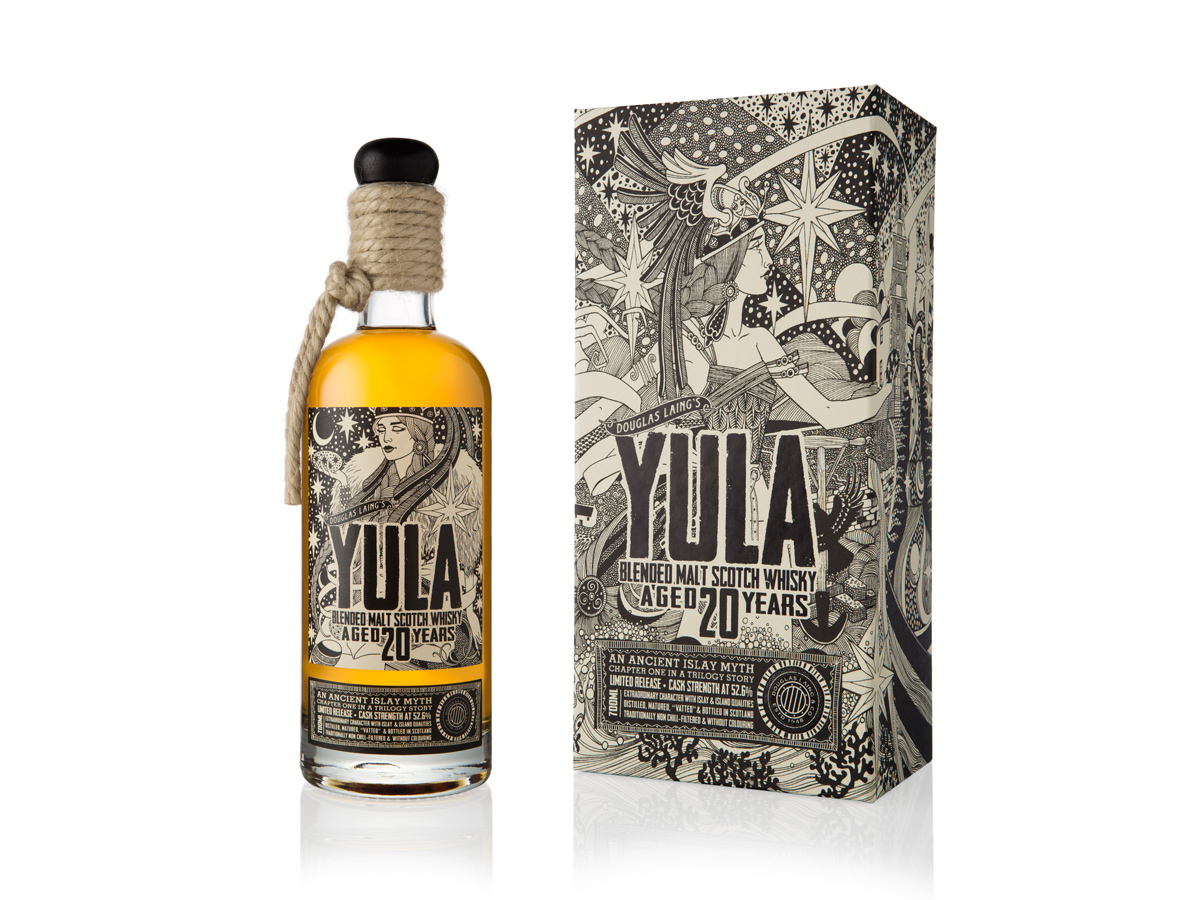
The Yula 20 Year Old Blended Malt is a quite different beastie. The Douglas Laing crew are fond of Islay and, indeed, the family has origins there. This is the first of a range of three featuring several of the Islands’ peaty malts. Just 900 bottles of this first expression are available for global sale. Probably not one for the Santa list then.

The name Yula is that of a Norse goddess who went searching for a lost lover, dropping stones from her apron en route. Islay is said to be the last of the stones she dropped. Alas unsuccessful in finding her heart’s desire, it is told she perished in the seas round Islay. She’s very beautifully represented on the packaging. Douglas Laing do go in for some innovative label and carton designs.

Douglas Laing Yula

On the nose there was clean sea air at first, then slightly medicinal or disinfectant/liniment notes with some smoke and fresh tar. With water, a bit more smoke is released with some soft fudge and sweet cereal notes. To taste it shows smoke, oak, tar and char with some liquorice, toasted cereal. Residual sweetness on the edge of the tongue and a salty touch too. The finish is long and dry with smoke and char and some saltiness. A malt to sip by the briny waters on a dry, windy day.

My birthday is imminent and I asked for a bottle of This Is Not A Luxury Whisky from Compass Box which I wrote about last month. I guess I’ll find out soon enough.

Early November sees me at the Scottish Licensed Trade News Awards banquet as they kindly asked me to judge Whisky Bar of the Year and two categories of Restaurant of the Year this year. It was both a pleasure and a privilege to do that with my fellow judges. We find out who the winners are of those and all the other awards on Bonfire Night. Should be a blast. Having been sworn to secrecy on the winners I judged, I’ll be able to tell you in November who won what.

Till then, slainte mhath,

Caroline